1997
72” x 30”
Silk, masonite, mixed media
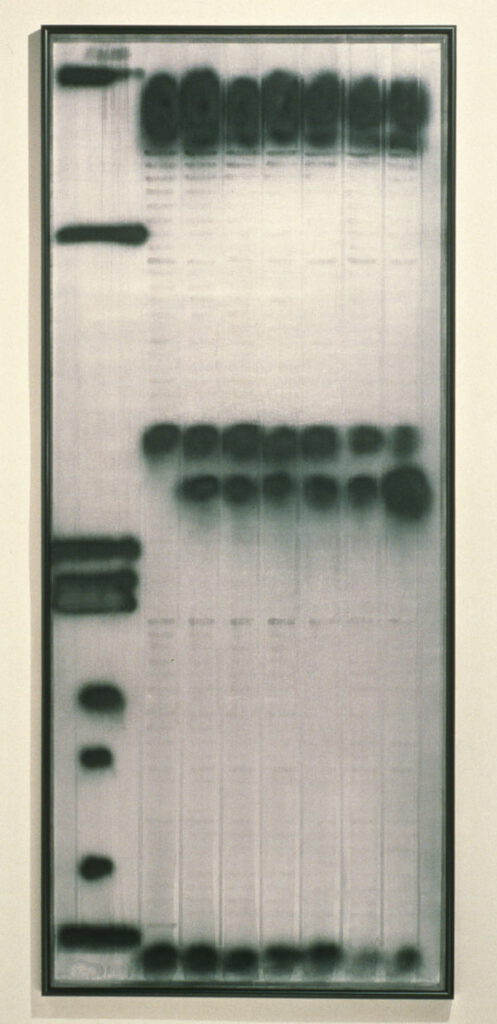

The conceptual foundation of Splicing originates in the critical period of 1992, a time when the notion of splicing a human chromosome transitioned from a theoretical concept to an area of intense research and high expectations. The prevailing thought was that introducing manipulated “corrected” genes could serve as a powerful method for treating specific diseases. This placed the Human Genome Mapping Project at a turning point, moving beyond mere genetic mapping toward the dawn of gene therapy and personalized medical treatments via gene modification.
Splicing (1997) translates this scientific and ethical frontier into an arresting visual discourse. Fabricated using silk, masonite, and mixed media, the artwork functions as an enlarged, tactile representation of messenger RNA (mRNA) insertion to create new proteins. This deliberate monumentalization of a microscopic biological act serves to directly interrogate the cultural anxieties precipitated by the onset of public conversations and profound fears surrounding the implications of cloning and genetic engineering.
72” x 30”
Silk, masonite, mixed media