1999
8” x 20”
Pond algae, clear gel medium on glass
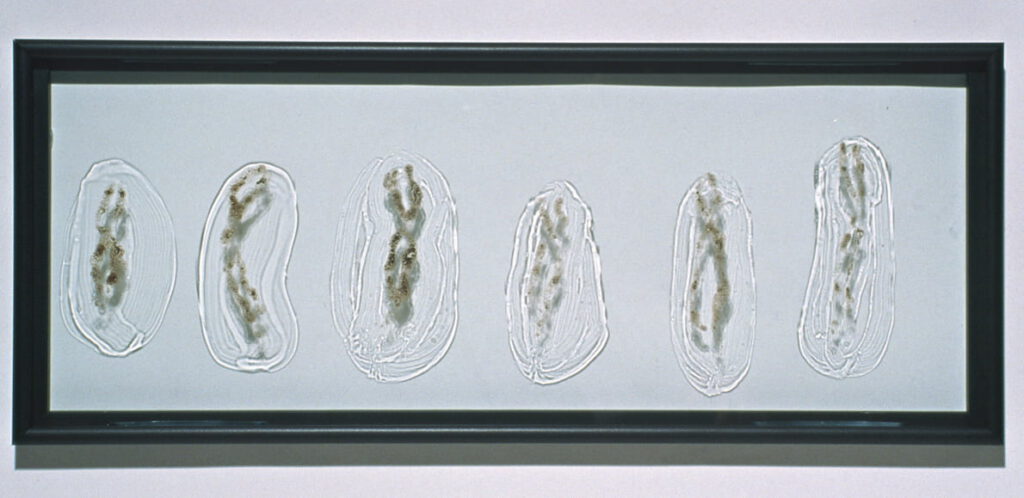

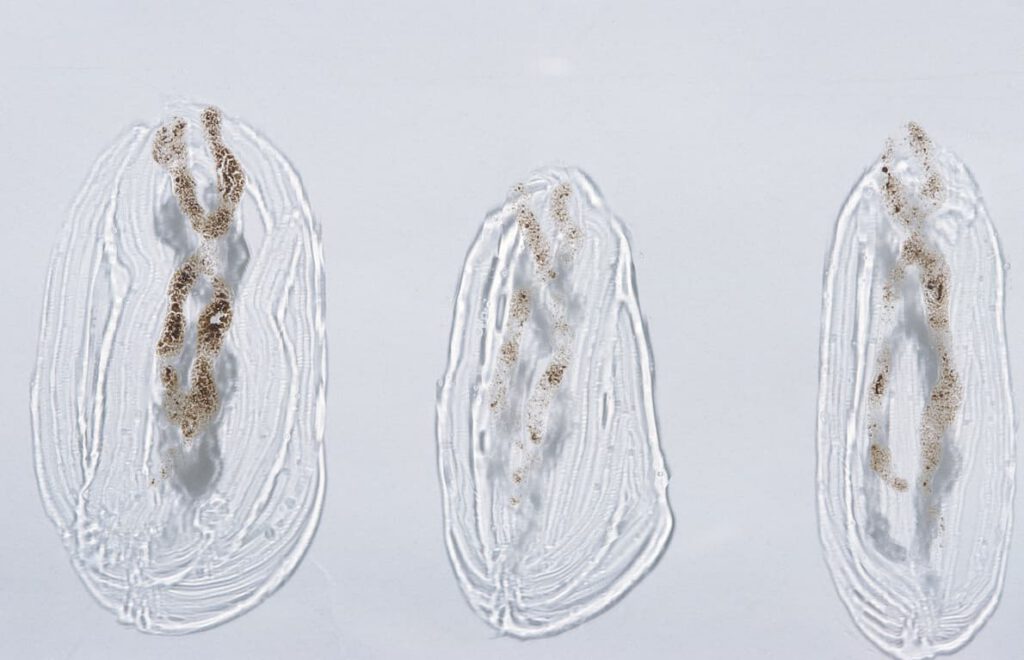
Six Fragile Sites (1999) delves into the inherent human fragility situated within Radtke’s sustained inquiry into the body as a measure, a space of occupation, and an archive of unseen forces. Created using pond algae, clear gel medium, and glass, the work establishes a profound dialogue between the micro-level of human genetics and the macro-scale of evolutionary time.
The title refers to “fragile sites in the human chromosome,” which manifest as visible “gaps or deletions on microscopy” and are associated with an inherited X-linked intellectual disability. By invoking this concept, the artwork taps into themes of vulnerability, latent knowledge, and the limits of representation—ideas central to Radtke’s practice. It draws attention to the body’s unseen, foundational codes and the inherent fragility they reflect.
The materiality of the piece underscores this tension between vulnerability and resilience. Radtke uses living pond algae as a mark-making medium, suspending it in a clear gel on glass. This material choice is significant: algae is revered as a descendant of the earliest life forms and is foundational to the evolution of complex life. Encasing the fragile biological matter is a gesture of both preservation and material agency, treating the organic components as collaborators that respond to their environment. Light passing through the six pairs of marks casts shadows on the wall behind the glass as a reference to chromosome pairs.
Ultimately, Six Fragile Sites suspends a moment in deep time, asking the public reader to consider the fundamental, delicate processes that govern both our personal physical identities and the history of life on Earth.
8” x 20”
Pond algae, clear gel medium on glass